001 Starting a blog for learning Rust coming from Python
From Python to Rust
Coming from a Python background, I’ve decided to dive into learning Rust. To document my journey and potentially help others along the way, I’m starting this blog. My goal is to explore the basics of Rust and compare them to how similar concepts are handled in Python. But before we jump into Rust, I’d like to share a bit of my background and how I got to this point.
A New Beginning: Starting with Rust
At Transaction Monitoring Netherlands, I had the opportunity to explore a rather new programming language: Rust. I worked alongside talented colleagues like Alberto Rodríguez, Rodrigo Alvaro Diaz Leven, and Denis Dallinga on a pet project. During some pair programming sessions with Alberto, I was introduced to Rust’s data manipulation capabilities, and whilst doing so I came across the Polars library. This sparked my interest and is a large part of my motivation to learn about Rust and how it’s being used within the Python ecosystem.
Where It All Began
I had been interested in programming for a while, but it all really kicked off when I joined a program created by two students at Erasmus University Rotterdam. They founded an organization called Turing Society to provide students like me with an opportunity to learn coding. The two founders, Teodor N. Cătăniciu and Tomas Moska, have both made a profound and positive impact on my life.
Teodor N. Cătăniciu
Teodor returned from a coding bootcamp in San Francisco with a mission: to give others access to the same experience without the hefty price tag. Along with Tomas Moska, he founded Turing Society to achieve just that.
Teodor later went on to found Restart Network, a non-profit organization based in Rotterdam. Restart Network worked to promote inclusion and diversity in the European tech industry through a new model of education called “The Crowdsourced School.” It provided a physical space where individuals from refugee, low-income, and minority backgrounds could transform their lives. The organization helped over 100 people from nearly 40 countries restart their careers in tech.
Tomas Moska
Tomas was the first CTO of Dashmote, as far as I recall. Later, he went on to co-found Turing College, an online AI school designed for busy professionals. As an affiliated college of Woolf, a higher education institution in the European Union, Turing College offers world-class programs taught by Google-level engineers and Cambridge University PhDs. Turing College was also part of the Y Combinator W21 batch.
Humble beginnings
During the programme, I started out learning front-end basics such as HTML, JavaScript, CSS and jQuery. Later on we moved to back-end basics with PHP as a backend language, API’s and databases. This all came together as the LAMP stack (old but gold). During my studies I got started with Matlab and R, later on I moved to Python and this has been my go to ever since. Python really is a multi-functional programming language. From webdevelopment with Django and Flask to Data Science and Machine Learning with popular frameworks such as scikit-learn, PyTorch and TensorFlow.
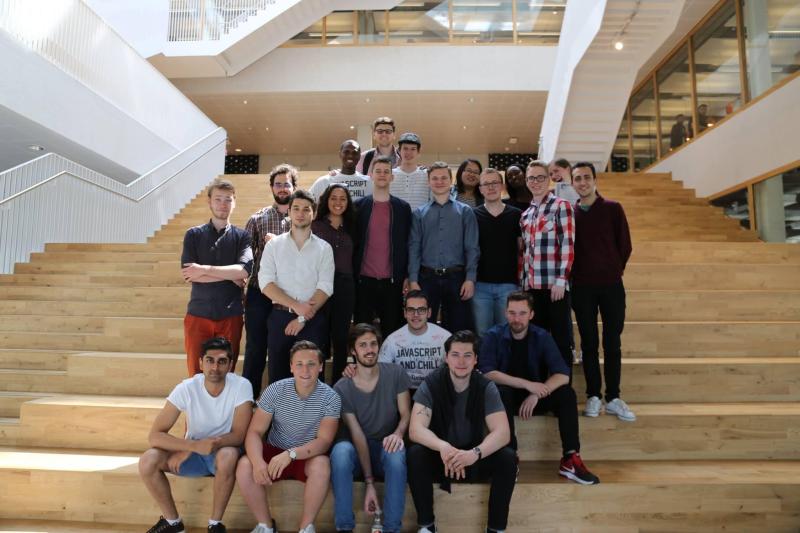
Turing Society 2016
I still have an old photo on my LinkedIn from the 2016 Turing Society group.
Enough reminiscing, time for something new
I’ve played with other programming languages such as Go and I’ve tried some cool things in Python such as Cython, but I feel that I’m up for a new challenge. I’ve seen some cool projects where people use Rust and Rust in Python. I’ve decided to start learning Rust and this is the main topic of this blog (for now).
Join the Journey Ahead!
If you're eager to continue this learning journey and stay updated with the latest insights, consider subscribing. By joining our mailing list, you'll receive notifications about new articles, tips, and resources to help you seamlessly pick up Rust by leveraging your Python skills.